
Regain Stability and Confidence: Evidence-Based Shoulder Dislocation Rehab Program by Physio360 Clinic
- PHYSIO 360

- Oct 29, 2025
- 3 min read
INTRODUCTION

Recurrent shoulder dislocation — when the shoulder joint repeatedly slips out of place — not only causes pain and limitation, but also carries the risk of long-term instability, functional loss and joint damage. The glenohumeral joint, with its wide range of motion, relies heavily on soft-tissue stabilisers. When those stabilisers are compromised (for example, by a previous dislocation, labral tear, capsular stretch or bony lesion), the risk of recurrence rises. PMC+2PMC+2
At Physio360 Clinic in Chennai, our goal is to restore dynamic stability, rebuild the shoulder’s support system, and safely guide patients back to full activity.
Understanding the Condition
The shoulder joint has only about 30% bony contact area; the rest of its stability comes from the labrum, joint capsule, glenohumeral ligaments, rotator cuff and scapular musculature. PMC
Risk factors for recurrent dislocation include: previous dislocation (especially at a young age), high-demand sports, ligamentous laxity, Hill-Sachs lesions or Bankart lesions. PMC+1
Rehabilitation is key: early motion, muscle recruitment, scapular control and proprioception all contribute to reducing recurrence risk. PMC+1
Exercise Protocol: Phase-by-Phase Approach
Phase 1: Acute / Protection Phase (Weeks 0-2)
Goals:
Protect the joint, reduce pain/swelling, and begin gentle activation.
Sling use as prescribed; encourage elbow, wrist and hand movement to maintain circulation. Medscape

Begin sub-maximal isometric exercises for the rotator cuff and deltoid (e.g., gentle shoulder internal/external rotation isometrics at neutral) in safe ranges. PMC+1
Gentle scapula setting: retraction/protraction with minimal load.
Modalities (ice, electrotherapy) as needed to control pain/inflammation.
Phase 2: Early Strength & Control Phase (Weeks 2-6)
Goals:
Restore range of motion (ROM), improve muscle strength, and initiate dynamic stability.
Progress to active-assisted and active ROM within safe limits (avoid full ER/abduction >90° early). PMC+1
Start closed kinetic chain (CKC) exercises: weight bear through arm on wall or table (e.g., wall push-ups, weight shifts) to develop co-contraction and proprioception. PMC
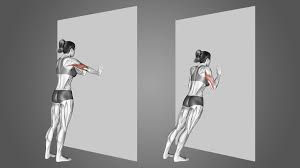
Begin isotonic strengthening: rotator cuff (internal/external rotation with theraband), scapular stabilisers (serratus anterior, lower/middle trapezius) at 0-30° elevation. PMC+1
Continue posture and trunk/core stability work — ensure base is stable for shoulder function.
Phase 3: Advanced Strength & Function Phase (Weeks 6-12)
Goals:
Achieve near full ROM, build strength in functional positions, and challenge neuromuscular control.
Progress to open chain exercises above 90°, eccentric strengthening for the rotator cuff and the deltoid. PMC

Incorporate dynamic stability drills: single-arm plank variations, perturbations, unstable surfaces.
Sport/occupation-specific drills: overhead reaching, throwing preparation, pushing/pulling tasks.
Continue scapular control under load, progressive resistance, and endurance training.
Phase 4: Return to Sport / Activity Phase
Goals:
Restore full functional strength, power, and agility and ensure safe return to high-demand tasks.
Plyometric and agility work: medicine ball throws, overhead plyo, change-of-direction drills for overhead/athletic athletes.

Simulated sport skill training under supervision: gradually reintroduce the movements that caused instability originally.
Ongoing maintenance: rotator cuff, scapular stabilisers, trunk/hip chain strengthening — reduce risk of future dislocation.
Special Considerations at Physio360 Clinic
At Physio360 Clinic in Chennai:
We assess the entire kinetic chain — shoulder, scapula, trunk, hip and lower limb — to identify contributing factors to instability.
We customise the protocol based on imaging findings (e.g., labral involvement, bony lesions) and collaborate with the orthopaedic team when required.
We emphasise neuromuscular control, proprioception and movement re-education, not just strength. Research supports this comprehensive view in shoulder instability rehab. PMC
Regular monitoring and functional testing guide progression and safe return to sport/work.
Conclusion
Recurrent shoulder dislocation can be effectively managed with a structured, phase-based physiotherapy protocol focused on protecting the joint, rebuilding strength, regaining control and safely returning to activity. By addressing both static and dynamic stabilisers — including rotator cuff, scapular and core musculature — the risk of recurrence is reduced and functional outcomes improved.
At Physio360 Clinic, Chennai, our evidence-based approach and personalised rehabilitation plans help patients regain confidence, stability and performance in everyday life and sport.
References:
Ma R, Brimmo OA, Li X. Current Concepts in Rehabilitation for Traumatic Anterior Shoulder Instability. 2017. tigerortho.com
Li X, et al. Rehabilitation for Shoulder Instability – Current Approaches. PMC. PMC
Gaballah A, et al. Six-week physical rehabilitation protocol for anterior shoulder dislocation in athletes. PMC. PMC


Comments