
Mechanics of Swimming – A Complete Guide by Physio360 Chennai.
- PHYSIO 360

- Feb 20
- 4 min read
INTRODUCTION;
Swimming is one of the most effective full-body workouts, combining strength, endurance, flexibility, coordination, and cardiovascular fitness. Whether you are a competitive swimmer, fitness enthusiast, rehabilitation patient, or athlete cross-training, understanding the biomechanics and mechanics of swimming helps improve performance, prevent injury, and enhance efficiency.
At Physio360 Chennai – Best Physiotherapy and Sports Rehab Centre, we regularly assess swimmers for shoulder pain, neck strain, lower back discomfort, and knee issues caused by faulty swimming mechanics. Let’s explore swimming from a biomechanical and physiotherapy perspective.
Understanding the Mechanics of Swimming.
Swimming mechanics are based on three main biomechanical principles:
Body Position and Alignment
Propulsion
Drag Reduction
Efficient swimmers maintain optimal alignment while generating maximum propulsion with minimal resistance.
Body Position & Alignment
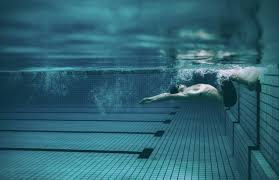
✔ Horizontal Streamline Position
Head in neutral alignment
Eyes looking downward
Hips close to the water surface
Core muscles engaged
Poor alignment increases hydrodynamic drag, leading to early fatigue and shoulder overload.
✔ Role of Core Stability
The core muscles (transversus abdominis, obliques, multifidus) stabilise the trunk and allow efficient force transfer from upper to lower limbs.
At Physio360 Sports Physiotherapy in Chennai, we emphasise:
Core strengthening
Lumbo-pelvic control
Postural correction
Scapular stabilization
These reduce energy wastage during swimming.
Propulsion – How Swimmers Move Forward
Propulsion is generated through coordinated movements of:
Upper limbs
Lower limbs
Trunk rotation
Upper Limb Mechanics (Freestyle Example)
The arm stroke has four phases:
1. Entry Phase
Hand enters water in line with the shoulder
Avoid crossing midline (prevents shoulder impingement)
2. Catch Phase
Elbow stays high
Forearm vertical
Engages the latissimus dorsi and rotator cuff
3. Pull Phase
Powerful backward pull
Uses latissimus dorsi, pectoralis major, triceps
4. Recovery Phase
Relaxed arm recovery
Controlled scapular movement
Incorrect mechanics may lead to:
Swimmer’s shoulder
Rotator cuff tendinitis
Shoulder impingement syndrome
At Physio360 Chennai – Best Shoulder Physiotherapy Clinic Near Me, we treat swimmers with advanced manual therapy, taping, dry needling, and sports rehab protocols.
Lower Limb Mechanics.
Flutter Kick (Freestyle & Backstroke)
Movement originates from the hip
Minimal knee flexion
Ankle plantarflexed
Muscles involved:
Hip flexors
Gluteus maximus
Quadriceps
Gastrocnemius
Improper kicking leads to:
Knee pain
Hip flexor strain
Lower back stress
At Physio360 Sports Injury Rehabilitation Centre in Chennai, we focus on:
Hip mobility
Ankle flexibility
Glute activation
Neuromuscular control
Trunk Rotation – The Power Generator.
Swimming is not just arm movement. It is a whole-body rotational sport.
Rotation improves stroke length
Reduces shoulder overload
Enhances propulsion
Limited thoracic mobility increases shoulder strain.
We assess:
Thoracic spine mobility
Scapulothoracic rhythm
Core rotational strength
at Physio360 – Advanced Sports Physiotherapy in Chennai.
Biomechanical Forces in Swimming
Swimming involves interaction between:
✔ Buoyancy
Upward force that keeps the swimmer afloat.
✔ Drag
The resistance force opposes forward motion. Types:
Form drag
Wave drag
Friction drag
✔ Lift & Propulsion
Created by hand and forearm pushing against water.
Efficient swimmers reduce drag and maximise propulsion.
Common Swimming Injuries
At Physio360 Chennai – Best Physiotherapy Clinic Near Me, common swimmer complaints include:
Shoulder impingement
Rotator cuff tendinitis
Neck strain
Lumbar spondylosis
Breaststroke knee
Ankle stiffness
Why Injuries Happen:
Overuse
Poor stroke technique
Muscle imbalance
Weak scapular stabilisers
Tight posterior capsule

Strength & Conditioning for Swimmers
A proper land-based training program improves swimming mechanics.
✔ Essential Exercises:
Scapular retraction exercises
Serratus anterior activation
Rotator cuff strengthening
Core stabilisation drills
Glute bridges
Thoracic mobility exercises
At Physio360 Sports Centre Chennai, we provide:
✅ Sports physiotherapy
✅ Biomechanical analysis
✅ Video stroke assessment
✅ Shoulder rehabilitation
✅ Return-to-sport protocols
✅ Endurance training programs
Stroke-Specific Biomechanics
1️⃣ Freestyle
Alternating arm pull
Continuous flutter kick
Body rotation essential
2️⃣ Breaststroke
Symmetrical arm pull
Frog kick
High knee stress
3️⃣ Butterfly
Simultaneous arm recovery
Dolphin kick
High shoulder load
4️⃣ Backstroke
Similar to freestyle but supine
Requires a strong posterior chain
Each stroke demands different muscle activation and joint loading patterns.
Role of Physiotherapy in Swimmers
At Physio360 Chennai – Best Sports Physiotherapy Near Me, we offer:
🔹 Comprehensive Assessment
Postural evaluation
Muscle imbalance testing
Range of motion analysis
Functional movement screening
🔹 Treatment Modalities
Manual therapy
IASTM
Kinesiology taping
Dry needling
Electrotherapy
🔹 Rehabilitation Focus
Injury prevention
Performance enhancement
Stroke correction
Strength & conditioning
Performance Tips for Better Swimming Mechanics
✔ Maintain neutral head position
✔ Engage core throughout stroke
✔ Avoid crossing arm midline
✔ Develop ankle flexibility
✔ Improve thoracic rotation
✔ Balance training volume with recovery
Why Choose Physio360 Chennai?
If you are searching for:
Best physiotherapist near me
Sports physiotherapy in Chennai
Shoulder pain treatment
Swimmer’s shoulder rehab
Advanced sports injury clinic
Performance physiotherapy centre
Physio360 Chennai is your trusted destination.
We specialise in sports injury rehabilitation, shoulder physiotherapy, aquatic sports injury management, endurance training, and biomechanical correction.
Book Your Assessment Today
Whether you are a competitive swimmer, triathlete, or fitness enthusiast, optimising your swimming mechanics improves performance and prevents injuries.
Visit Physio360 Chennai – Best Physiotherapy & Sports Rehab Centre. Recover Faster. Swim Stronger. Perform Better.
RESEARCH AND REFERENCE ARTICLE ;
1.Biomechanics of swimminghttps://www.researchgate.net/publication/313617617_Biomechanics_of_swimming.


Comments